
How Children Learn Social Skills Through Play
If you've ever watched a group of children play, you've probably seen much more happening than it first appears.
One child wants the red truck. Another child has it.
Two children disagree about who gets to be the teacher during pretend school.
Someone changes the rules halfway through a game.
A child wants to join a group but doesn't know how.
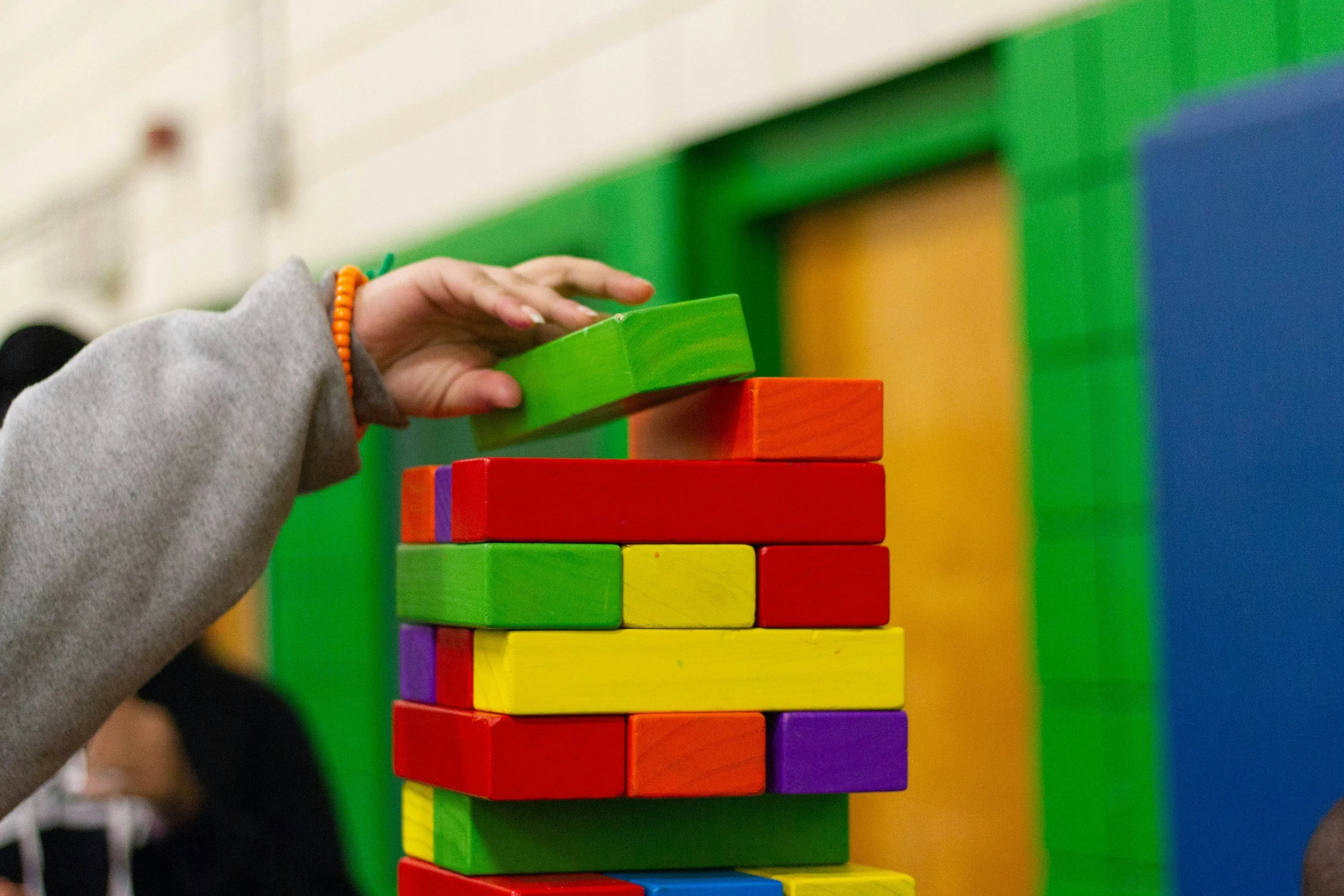
Another gets frustrated when the block tower they've been building together falls over.
To adults, these moments can look like ordinary childhood play, and sometimes a little chaos. But children are doing something incredibly important: They're practicing how to be with other people.
The American Academy of Pediatrics (AAP) explains that play helps children learn to get along with others, regulate emotions, develop language and social skills, and cope with stress. (HealthyChildren.org)
At WHALE, that's one reason we believe play is so important for children of every ability.
Play Is How Children Practice Social Skills
Adults can explain concepts like sharing, cooperation, compromise, empathy, and friendship, but children also need opportunities to experience those skills.
Play provides those opportunities naturally.
The National Association for the Education of Young Children (NAEYC) identifies play as a central part of children's development and learning. During play, children develop peer relationships, language, problem-solving abilities, self-regulation, and social competence. (NAEYC)
Think about two children building a fort together.
They may have to decide:
"Where should we put this?"
"Can I have that block?"
"No, let's make the door over here."
"Can she play too?"
"You build this side and I'll build that side."
In a few minutes of play, they've practiced communication, negotiation, cooperation, problem-solving, flexibility, and perspective-taking. They probably didn't realize they were learning any of those things. They were just playing.
Play Teaches Children How to Communicate
Children need communication to make play work. They learn to ask for things, explain their ideas, tell another child what they want, listen to someone else's idea, protest when they don't like something, ask to join an activity, and negotiate what happens next.
And communication doesn't have to mean spoken language. Children communicate in many different ways - through speech, gestures, facial expressions, signs, pictures, AAC devices, body language, and behavior.
For a child who communicates differently, successful social play may look different from another child's play. Different doesn't mean less meaningful.
Play Teaches Sharing and Turn-Taking
Waiting is hard. Sharing something you really want can be even harder.
Play gives children repeated, meaningful opportunities to practice both. A child might have to wait for the swing, take turns rolling a ball, pass game pieces, share art supplies, or figure out how two people can use the same toy.
NAEYC gives an example of children negotiating how long each child can use a desired toy, demonstrating how everyday play creates opportunities to practice turn-taking and social problem-solving. (NAEYC)
These skills develop gradually. We shouldn't expect a young child, or a child who needs additional developmental support, to master them simply because an adult has said, "You need to share."
They learn through practice, support, modeling, and repetition.
Play Helps Children Learn to Solve Conflicts
Where children play together, disagreements will happen. That's not necessarily a bad thing. A disagreement can become an opportunity to learn.
Imagine three children building with blocks. Two want to build a castle, while the third wants to build a zoo.
What happens next?
Maybe an adult immediately decides for them. But when it's safe and developmentally appropriate, children can also be supported in finding their own solution:
"Could your castle have a zoo?"
"Could you build two things?"
"How can everyone have a job?"
NAEYC explains that play gives children opportunities to collaborate, negotiate, solve problems, take turns, understand another person's perspective, and negotiate when ideas conflict. (NAEYC)
Conflict isn't always evidence that play is going poorly. Sometimes working through conflict is part of the learning.
Pretend Play Helps Children Understand Other Perspectives
Pretend play can be especially powerful for social development. When children pretend to be a doctor, parent, teacher, firefighter, veterinarian, chef, baby, superhero, or even a dog, they're experimenting with perspectives other than their own.
They have to think:
What would this person do?
What would they say?
How would they feel?
NAEYC notes that dramatic play gives children opportunities to take on different roles, while social play supports learning to see situations from another person's point of view. (NAEYC) That ability to recognize that another person may think, feel, want, or experience something differently is an important part of developing relationships.
Play Gives Children Opportunities to Practice Emotional Regulation
Play doesn't always go the way a child wants.
The tower falls.
Someone else wins.
A friend says no.
The swing isn't available.
The game changes.
Another child takes the toy.
These are small moments, but they give children opportunities to experience frustration, disappointment, excitement, waiting, uncertainty, and compromise in a supported environment.
The AAP reports that play can help children regulate emotions, while Harvard's Center on the Developing Child explains that playful activities can strengthen executive-function skills such as attention, working memory, and basic self-control. (HealthyChildren.org)
These abilities matter socially because successful interaction with other people often requires us to pause, adapt, wait, remember expectations, and manage our reactions.
Play Helps Children Learn Cooperation
Some of the best play requires children to accomplish something together.
Build the tallest tower.
Create a pretend restaurant.
Finish a puzzle.
Put on a show.
Create an imaginary world.
Children begin discovering that another person's idea can make their game better. Cooperative play requires children to communicate, make plans, divide roles, adjust when something doesn't work, and sometimes put the group's goal ahead of what they personally wanted to do.
Harvard's Center on the Developing Child describes social play as an important practice ground for executive-function skills. For example, during pretend play, children may need to develop a plan, assign roles, remember those roles, communicate with one another, and adapt the story as the game continues. (Harvard Center on Developing Child)
That's a lot of learning happening during a game of pretend.
Play Helps Children Learn How to Make Friends
Friendship requires practice, too. Children learn how to approach another child.
"Can I play?"
They learn how to keep an interaction going.
"Want to build another one?"
They begin noticing what other children enjoy. They experience what happens when someone wants something different. They discover which behaviors help other children want to continue playing with them.
NAEYC specifically identifies peer relationships as one of the areas developed through play and emphasizes that young children need sustained opportunities for play both indoors and outdoors. (NAEYC) Friendship isn't simply something children either "have" or "don't have." Many of the skills involved in making and maintaining friendships can be learned and practiced.
What If My Child Doesn't Play Like Other Children?
This is an especially important question for families of children with disabilities.
Not every child will enter a room, approach another child, and immediately begin cooperative play. A child may prefer to play alone. Another may play next to other children without interacting much. Some children may want to participate but have difficulty figuring out how to join. A child with limited spoken language may communicate through AAC, gestures, signs, sounds, facial expressions, or movement. Another child may become overwhelmed by the noise, unpredictability, physical proximity, or communication demands involved in group play. And some children simply need more time, support, modeling, or repetition.
Social development should not be about forcing every child to interact in exactly the same way. At WHALE, we believe the better question is:
What support does this child need to participate successfully?
That might mean creating a smaller play group, providing visual supports, modeling how to ask for a turn, offering sensory supports, helping another child understand their communication, giving the child additional processing time, or beginning with an activity the child already loves.
Adults can provide what developmental experts sometimes call scaffolding, offering enough assistance for a child to participate successfully and gradually stepping back as the child becomes more independent. Harvard's Center on the Developing Child describes this adult role as helping children accomplish challenging tasks and then reducing that assistance as their abilities develop. (Harvard Center on Developing Child)
Adults Have an Important Role—But We Don't Have to Control the Play
Supporting children's play doesn't mean adults need to direct every interaction. Sometimes our job is simply to create the opportunity. Other times, a child may need a little coaching.
Instead of solving a disagreement immediately, an adult might say:
"It looks like you both want the truck. What could we do?"
If a child wants to join:
"Let's watch what they're playing. What could you say to them?"
If another child looks upset:
"Look at her face. How do you think she's feeling?"
If the game isn't working:
"You have two different ideas. How could we use both?"
NAEYC describes how educators can use verbal and visual cues to help children join activities, take turns, share, regulate themselves, and interact successfully with peers. (NAEYC) The goal isn't to eliminate every difficult social moment. It's to give children the support they need to learn from those moments.
How Families Can Encourage Social Learning Through Play
You don't need expensive toys, elaborate activities, or a formal lesson. Give children opportunities to play.
Play board games together. Build with blocks. Go to the playground. Create a pretend restaurant. Have a family dance party. Play catch. Invite another child over. Build a blanket fort. Play dress-up. Draw together. Let siblings invent a game.
And when something doesn't go perfectly, remember that the imperfect moments often contain the learning. The AAP emphasizes that play with both adults and peers helps build children's brains, bodies, and social relationships. (HealthyChildren.org) Sometimes the most valuable thing an adult can do is provide a safe environment, remain nearby, offer support when it's needed—and let children play.
At WHALE, Play Has a Purpose
At WHALE Respite Center, play isn't something children do only after the "learning" is finished.
Play is part of the learning.
Whether children are building together in a classroom, creating an imaginary game, playing outside, participating in a group activity, or spending time with friends during weekend respite, they are continually practicing skills they can carry into other parts of their lives.
And because WHALE serves children with a wide range of abilities, we also recognize something important: Social success doesn't look exactly the same for every child.
Our goal isn't to make every child play, communicate, or interact in the same way. It's to create an inclusive environment where children have opportunities to connect with others, practice emerging skills, develop relationships, and experience the joy of belonging.
Because sometimes a game really is just a game.
But very often, while children think they're just playing, they're learning how to communicate, cooperate, solve problems, manage emotions, build friendships, and be part of a community.
And that's some pretty important work.
Resources for Families
Families interested in learning more about play and child development can explore resources from the American Academy of Pediatrics' HealthyChildren.org, the National Association for the Education of Young Children (NAEYC), and the Center on the Developing Child at Harvard University.