
Helping Children Build Friendships Across Abilities
Friendship can begin with something incredibly simple.
"Want to play?"
Two children building a tower together. Sitting next to each other at lunch. Laughing at the same silly joke. Taking turns on the swing. Helping each other finish a puzzle.
Children don't have to have the same abilities, communicate in the same way, move through the world in the same way, or learn at the same pace to become friends.
But sometimes adults unintentionally create barriers between children with and without disabilities. We may assume children won't know how to interact. We may step in too quickly. We may separate children based on ability or provide so much adult assistance that children have fewer opportunities to connect naturally with their peers.
At WHALE Respite Center, we believe something different: Children of all abilities belong together.
And when we intentionally create opportunities for children to know one another as children - not as diagnoses, disabilities, or differences - we give authentic friendships a chance to grow.
Research and guidance on inclusive early childhood programs support this approach. The Early Childhood Technical Assistance Center (ECTA) reports that inclusion benefits children both with and without disabilities and notes that children with disabilities in inclusive settings can develop friendships with typically developing peers. (ECTA Center)
Friendship Is Important for Every Child
Friendships are more than having someone to play with.
Through relationships with other children, kids learn to communicate, cooperate, solve disagreements, understand other perspectives, manage emotions, and experience what it means to belong to a group.
The American Academy of Pediatrics explains that friendships help children learn to understand and connect positively with others and recommends giving children opportunities to develop relationships with peers beginning in the early years. (HealthyChildren.org)
For children with disabilities, these opportunities are just as important.
NAEYC emphasizes that play, exploration, interaction with peers, and developmentally appropriate learning opportunities are important for every child and should not be denied or limited because a child has a disability or developmental delay. (NAEYC)
Friendship is not an extra. Belonging is part of healthy childhood development.
1. Start With What Children Have in Common
Adults tend to notice differences.
Children often notice something much simpler:
"She likes dinosaurs, too."
"He thinks that's funny."
"She likes to swing really high."
"We both love trucks."
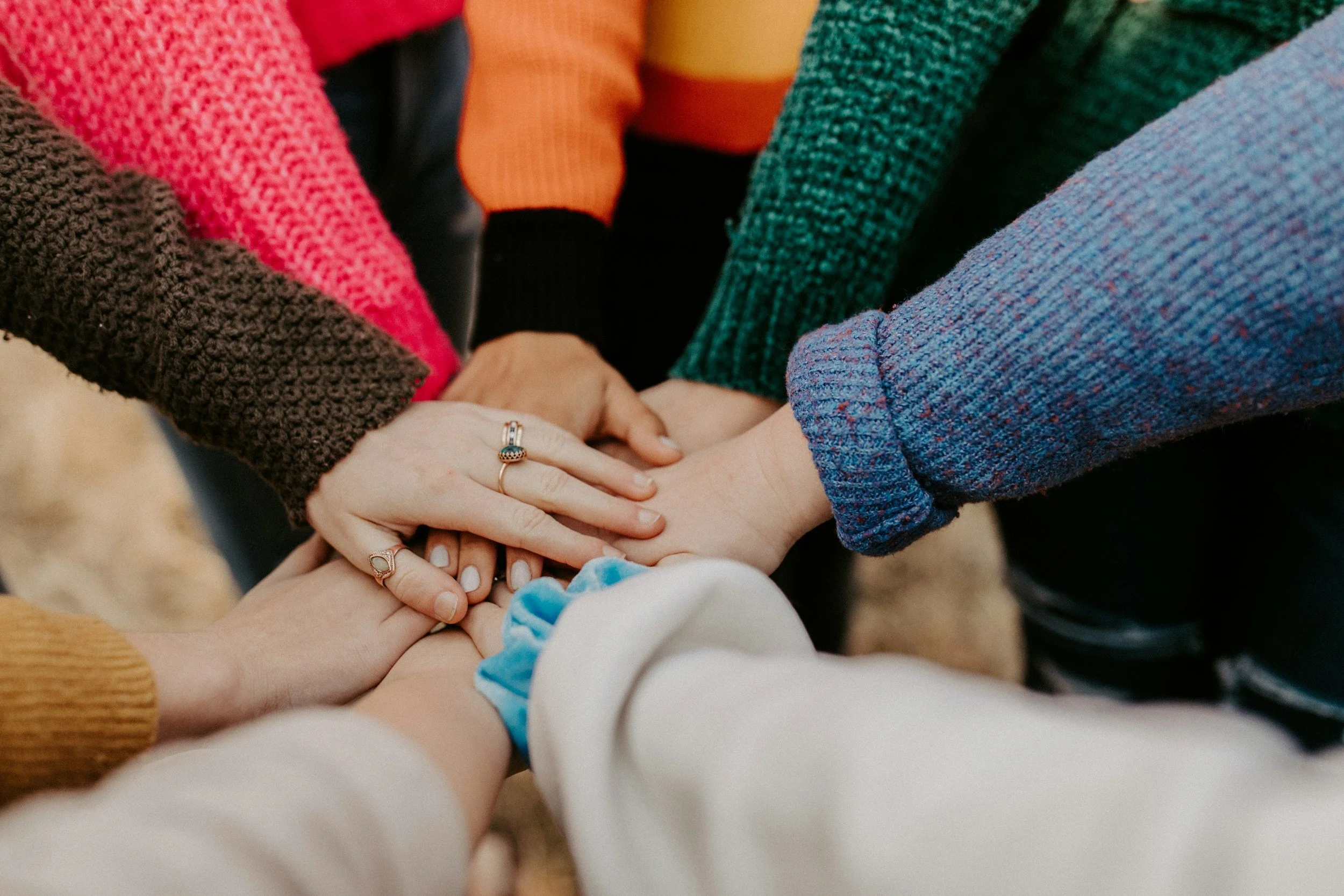
One of the easiest ways to encourage friendships across abilities is to start with shared interests rather than differences.
A child who uses a wheelchair and a child who runs everywhere may both love superheroes.
A child who uses an AAC device and a highly verbal child may both be fascinated by animals.
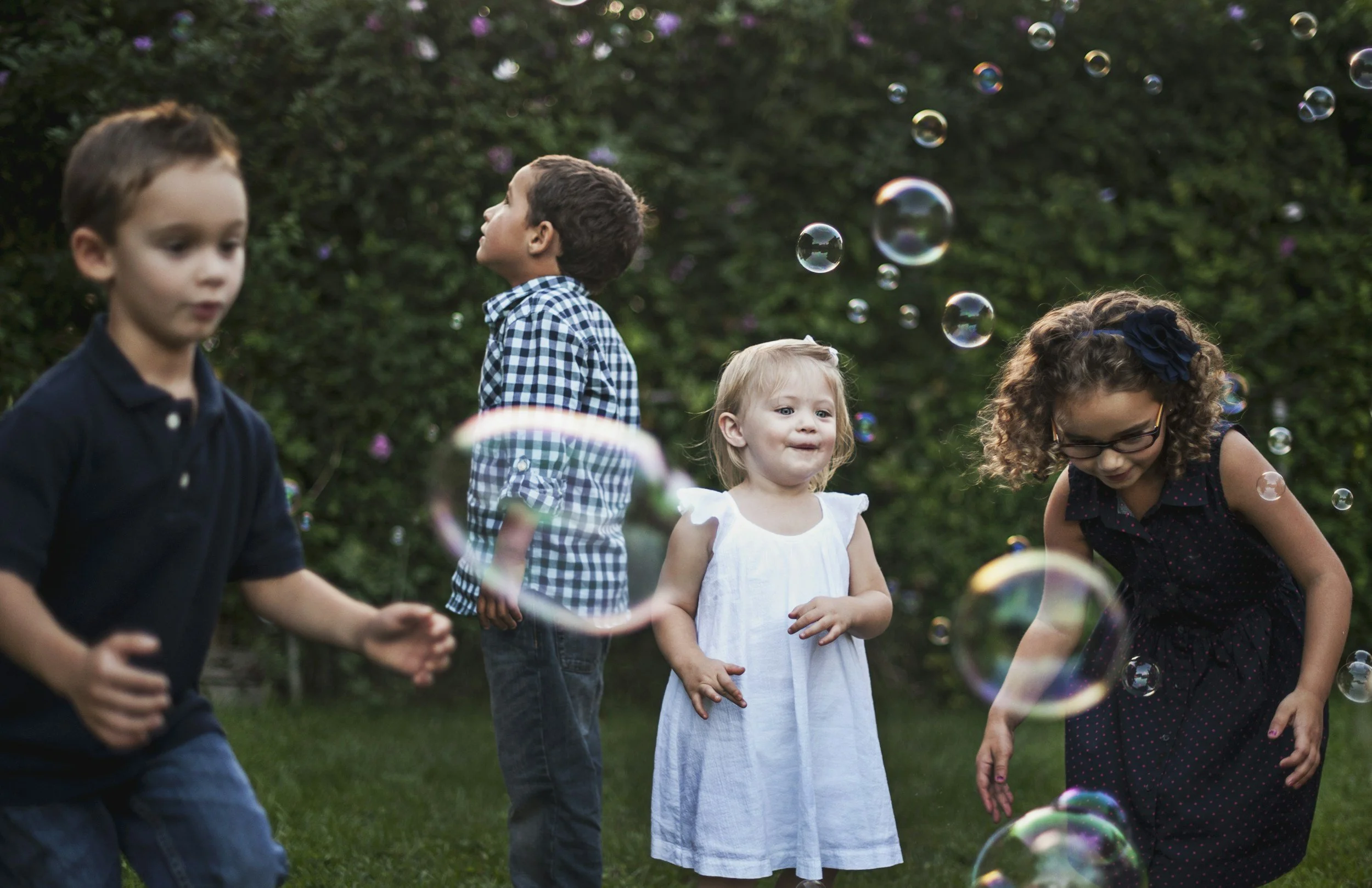
Two children with very different developmental abilities may both think bubbles are the greatest invention in human history.
Adults can help create the opportunity: "You both love trains. Do you want to build a track together?" Then give the relationship room to develop.
2. Teach Children That There Are Many Ways to Communicate
Friendship requires communication. But communication doesn't require speech.
Some children communicate verbally. Others use sign language, gestures, pictures, facial expressions, communication devices, or Augmentative and Alternative Communication (AAC). Children can learn this. Instead of treating a communication difference as something uncomfortable, explain it simply:
"Sophia uses her tablet to talk. Let's give her time to tell us what she wants."
"Eli doesn't use many words yet, but watch what he's showing you."
"Ask him the question and then wait for his answer."
This teaches an important lesson very early: Someone doesn't have to communicate exactly like you do for you to communicate with them.
3. Create Activities Where Children Need Each Other
Sometimes the easiest way to build a friendship is to give children something fun to do together.
Build a giant block tower.
Paint a mural.
Make a pretend restaurant.
Plant a garden.
Make music.
Create an obstacle course.
Put on a pretend show.
The goal isn't to announce, "Today we're going to practice inclusion!"
It's to create an activity where children naturally have reasons to interact.
NAEYC recommends planning activities that require participation from more than one child and creating opportunities for peers to participate together. For toddlers, this can be as simple as having two children paint together on one large piece of paper. (NAEYC)
Shared experiences create opportunities for shared relationships.
4. Adapt the Activity, Not the Child
Imagine children are doing an art activity that requires holding a thin paintbrush. One child has difficulty grasping it. The solution isn't necessarily to remove that child from the activity. Maybe we change the paintbrush.
NAEYC gives examples of adaptations such as using larger handles for children with motor difficulties, offering different tools for children with sensory needs, changing seating, modifying materials, and arranging environments so children with physical disabilities can participate alongside their peers. (NAEYC)
That distinction matters.
Instead of asking: "Can this child participate?"
Ask: "What needs to change so this child can participate?"
Sometimes the answer is a different tool. Sometimes it's more time. Sometimes it's a quieter space, visual support, adaptive equipment, an AAC device, a different way to take a turn, or assistance from an adult or peer.
High-quality inclusion isn't simply putting children with different abilities in the same room. It involves intentionally supporting their participation in learning and social activities, including individualized accommodations when necessary. (ECTA Center)
5. Help Children Join In
"Go play." ...That's a surprisingly complicated instruction.
A child must identify what other children are doing, understand the game, approach the group, figure out when to speak, know what to say, interpret the response, and then keep the interaction going. Some children need help learning how to do that. An adult might coach:
"They're building a zoo. You could ask, 'Can I build an animal house?'"
Or:
"I think you want to play with them. Let's go ask together."
ECTA's indicators for high-quality inclusion recommend teaching children specific peer-interaction skills, modeling phrases children can use to start and continue interactions, arranging activities that encourage interaction, and creating consistent opportunities for children to socialize. (ECTA Center)
The American Academy of Pediatrics similarly notes that children have different social strengths and challenges and may need different kinds of adult coaching to develop friendships. (HealthyChildren.org)
A little support can sometimes be the bridge between watching the group and becoming part of it.
6. Don't Turn Children into Caregivers
This is an important distinction. There's a difference between friendship and helping someone because they have a disability. We absolutely want children to be kind and helpful. But we don't want a child without a disability to become another child's miniature aide. NAEYC specifically cautions adults to promote authentic friendships rather than allowing children without disabilities to take on a parental role with peers who have disabilities. (NAEYC)
Instead of:
"Can you take care of him?"
Try:
"Why don't you two do this together?"
Instead of always assigning one child to help another, create opportunities for both children to contribute. One child may open the container. The other may know exactly how the game works. One child might push the wagon. The other chooses where they're going. Friendship should include reciprocity.
Children with disabilities aren't just recipients of friendship, kindness, or help. They are friends who bring their own strengths, humor, ideas, interests, and personalities to relationships.
7. Answer Children's Questions About Disabilities
Children notice differences.
"Why does she have that chair?"
"Why doesn't he talk?"
"Why does she cover her ears?"
"Why does he eat through a tube?"
"Why does she do that with her hands?"
These aren't necessarily unkind questions. Often, they're genuine attempts to understand something unfamiliar. We don't have to hush children or make disability feel like something we're not supposed to talk about. Give a simple, respectful, and developmentally appropriate answer.
"Her wheelchair helps her get where she wants to go."
"He communicates differently. He can tell you things with his device."
"Loud sounds can feel really uncomfortable to her, so her headphones help."
Then move forward.
ECTA recommends that inclusive programs regularly discuss similarities, differences, disability, kindness, and ways children can support one another using developmentally appropriate language. (ECTA Center)
8. Teach Children to Include Without Forcing Friendship
Inclusion doesn't mean every child has to be best friends with every other child. Adults don't work that way, and children don't either. Children naturally gravitate toward certain peers as they develop friendships. The American Academy of Pediatrics notes that during the preschool years, children begin recognizing the unique qualities of different playmates and developing preferences for friends. (HealthyChildren.org)
Our job isn't to manufacture friendships. Our job is to make sure disability isn't the reason a friendship never had the opportunity to begin.
Teach children to make room. Invite someone into the game. Wait for someone to communicate. Choose activities everyone can access. Notice when someone is standing alone. Be curious about differences instead of being afraid of them. And then allow children to decide who becomes their friend.
9. Remember That Inclusion Benefits Children Without Disabilities, Too
Sometimes inclusion is discussed as though it's something children without disabilities provide to children with disabilities. That's not what the evidence suggests.
ECTA's review of research concludes that inclusion benefits children with and without disabilities. Research summarized by ECTA also found that parents and teachers observed peers learning qualities such as compassion and empathy in inclusive environments. (ECTA Center)
Children who regularly interact with people who communicate, move, learn, behave, and experience the world differently are also learning something important about their community: There isn't one right way to be a person.
Those lessons extend far beyond childhood.
10. Give Friendships Time to Develop
Not every interaction will result in friendship. Some playdates will be awkward. Someone won't want to share. A child might walk away. Two children may play beside each other for weeks before really playing together.
That's okay.
Friendships develop through repeated opportunities to see each other, play together, solve problems, laugh together, disagree, reconnect, and discover common interests.
Research summarized by ECTA notes that when children with disabilities have access to multiple playmates, they have more opportunities to develop social and play skills. (ECTA Center)
The goal isn't one perfect interaction. It's access to a community where relationships have the opportunity to grow.
What Families Can Do
Families can reinforce inclusion outside of childcare and school in very ordinary ways.
Invite children of different abilities to birthday parties and playdates. Choose parks and activities everyone can access when possible. Read books that naturally include characters with disabilities. Answer questions about differences honestly and respectfully. Model inclusive language. Encourage your child to communicate directly with a child with a disability rather than automatically talking to the adult beside them.
Most importantly, pay attention to the messages children hear from us.
If adults consistently communicate: "Of course you can play together", children are much more likely to believe it.
At WHALE, Everyone Belongs
At WHALE Respite Center, inclusion isn't about simply having children with and without disabilities in the same building.
It's about belonging.
That means children have opportunities to play together, learn together, laugh together, disagree with each other, help each other, communicate in different ways, participate with appropriate supports, and form genuine relationships.
ECTA identifies positive social-emotional skills, including friendships with peers and a sense of belonging, as important outcomes of high-quality inclusion. (ECTA Center)
That's the kind of community we want children to experience at WHALE.
Because when children grow up knowing people whose bodies, brains, communication, abilities, and needs are different from their own, difference becomes a normal part of their world, not a reason to exclude someone from it.
And somewhere along the way, something even better can happen.
The child who was initially introduced as "the child with a disability" simply becomes:
"That's my friend."
Resources for Families
Families who would like to learn more can explore resources from the American Academy of Pediatrics' HealthyChildren.org, the National Association for the Education of Young Children (NAEYC), and the Early Childhood Technical Assistance Center's resources on high-quality inclusion.